How It Shows Up
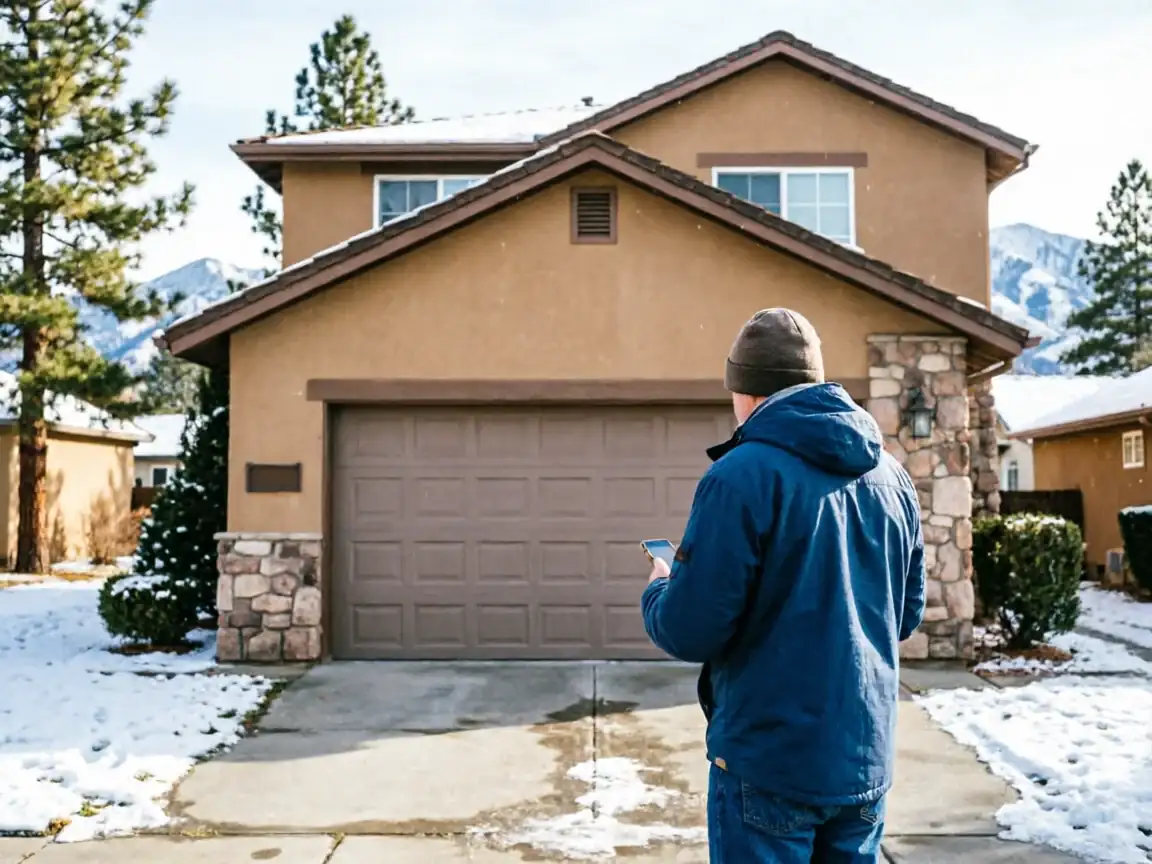
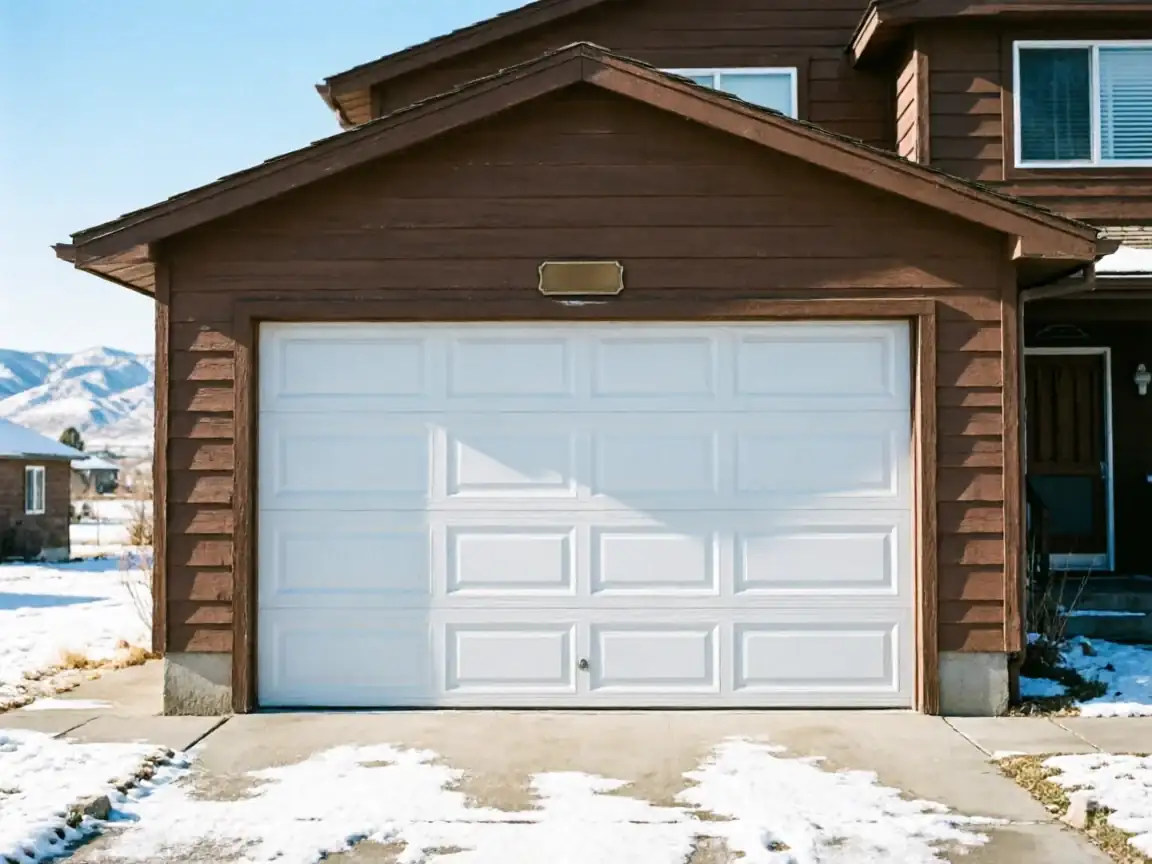
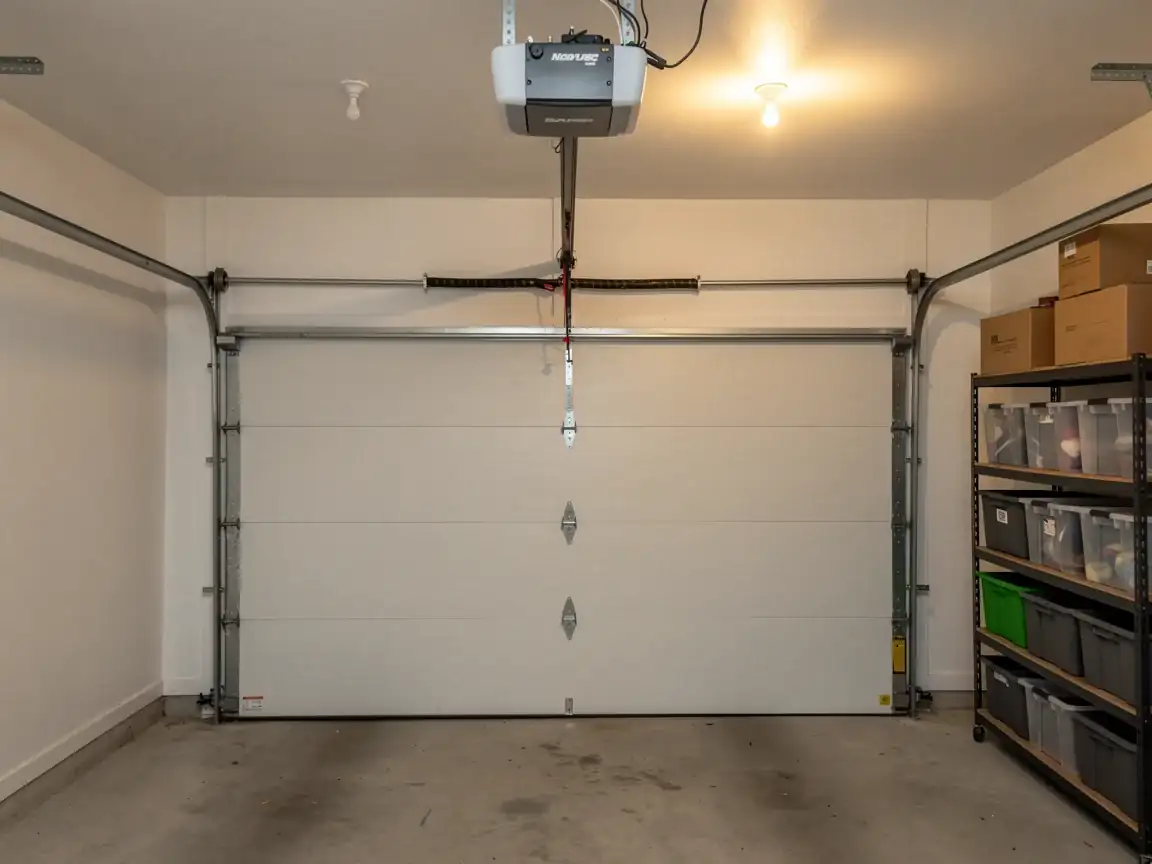
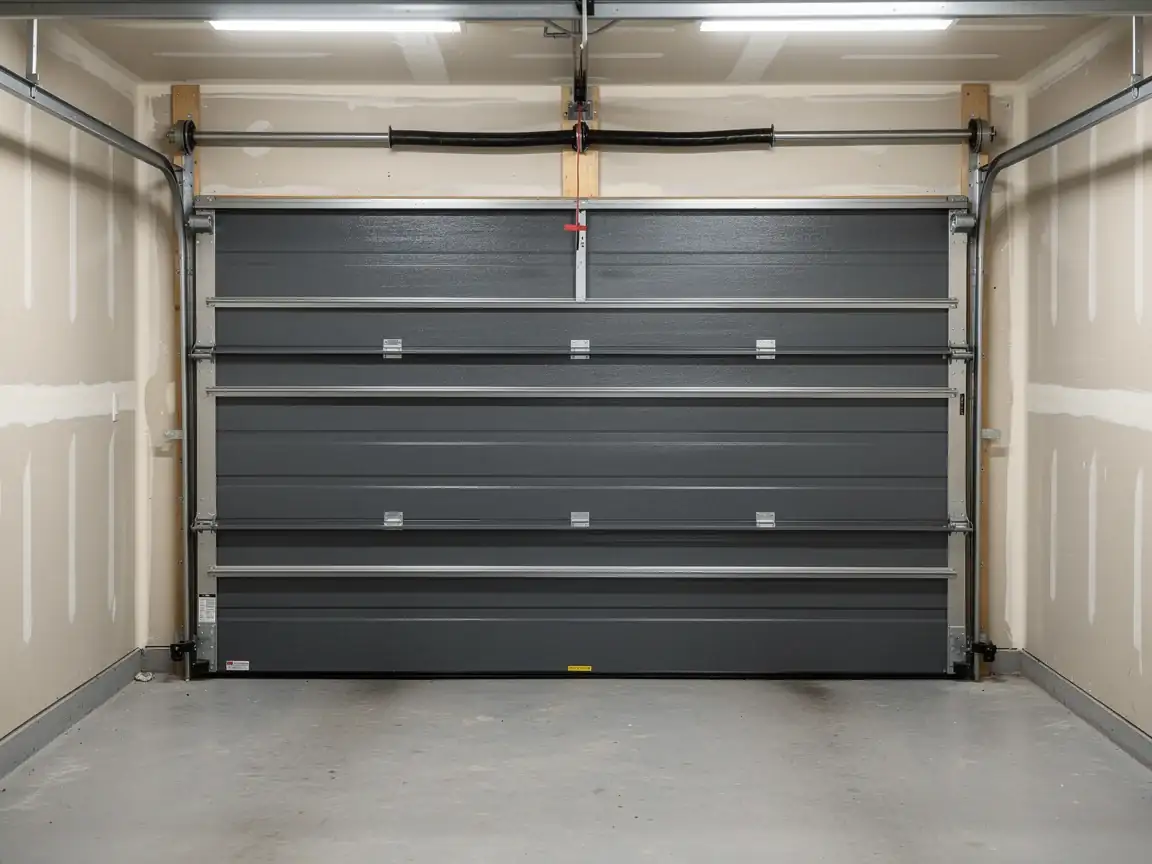
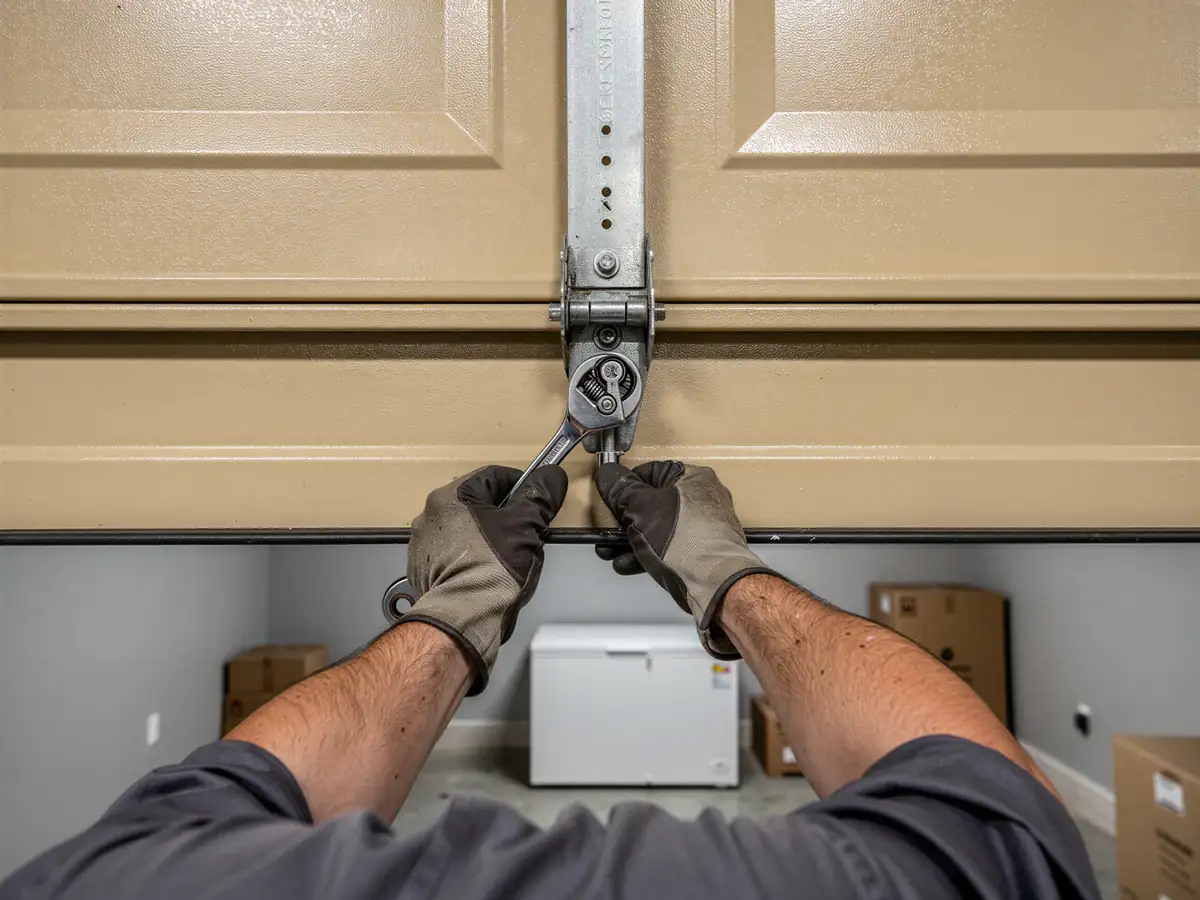
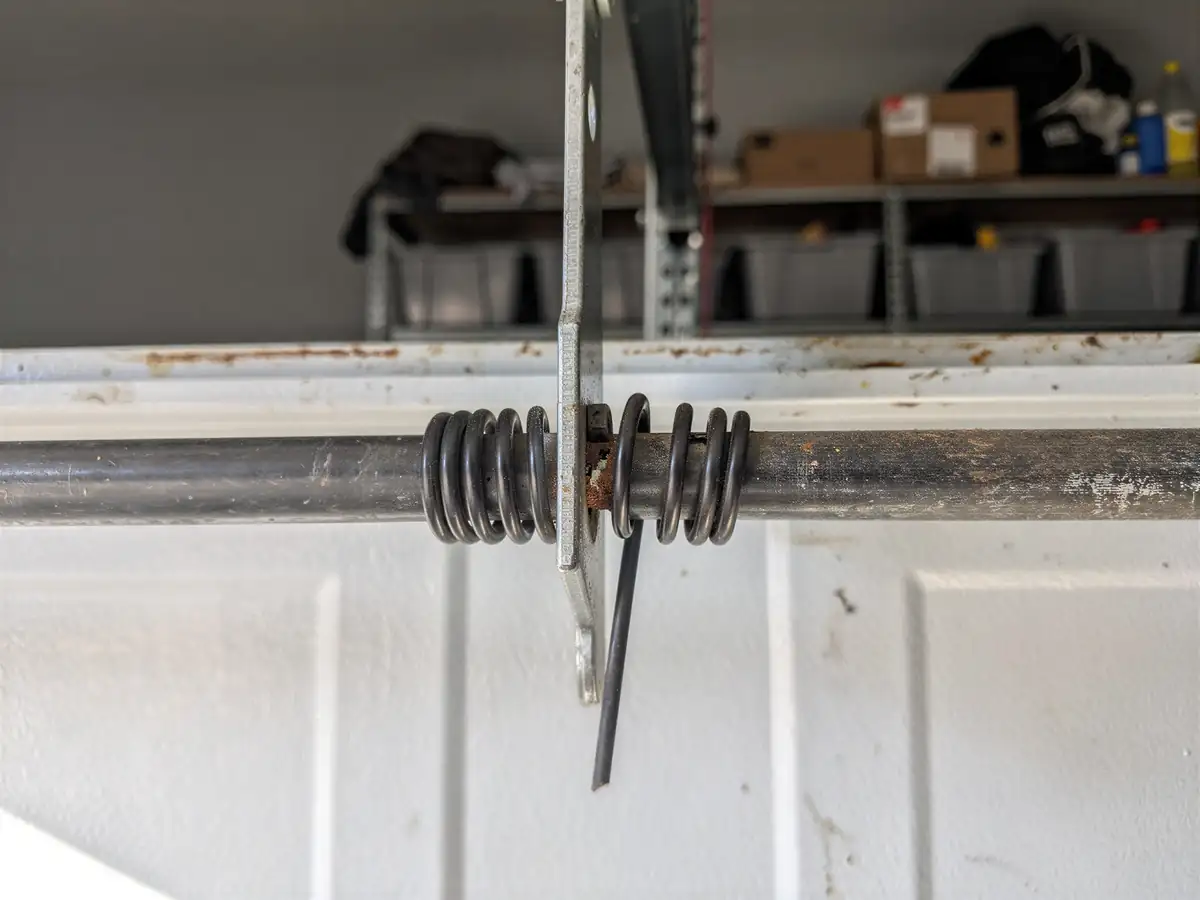
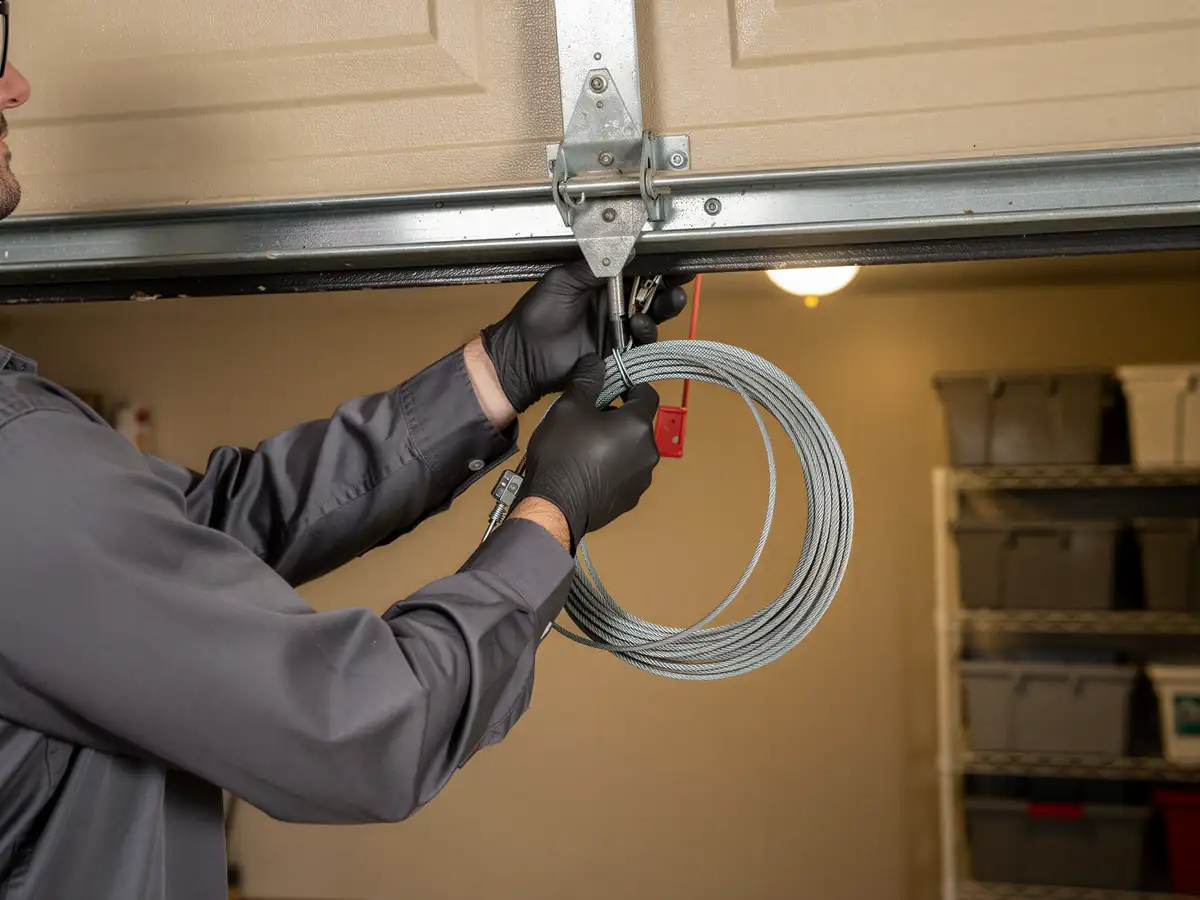
Most of the doors we see on service calls in Redlands went up around 1977 - steel sectional doors, single layer, no foam core, hung on the torsion or extension spring hardware that was standard before insulated doors became the norm. Nothing wrong with that build, but thirty-some years is a long run for a spring under daily tension, and it shows up as sudden failure rather than slow warning. A cable frays and lets go on one side of the door, and the panel racks sideways in the track. A torsion spring that's been wound and unwound two lifts a day for decades finally snaps, usually on a cold morning. Rollers in the original track - steel, not nylon, on a lot of these doors - wear a groove and start binding. Winters here hit hard; steel contracts in the cold, hardware that's already marginal gets worse fast when the temperature drops. None of this is exotic. It's what you'd expect from a door built when Carter was president, doing the job it was built for, finally running out of road. The fix is usually a spring and cable, sometimes a section of track - rarely the whole door, unless the panel itself has rusted through at the bottom.
The DIY Question
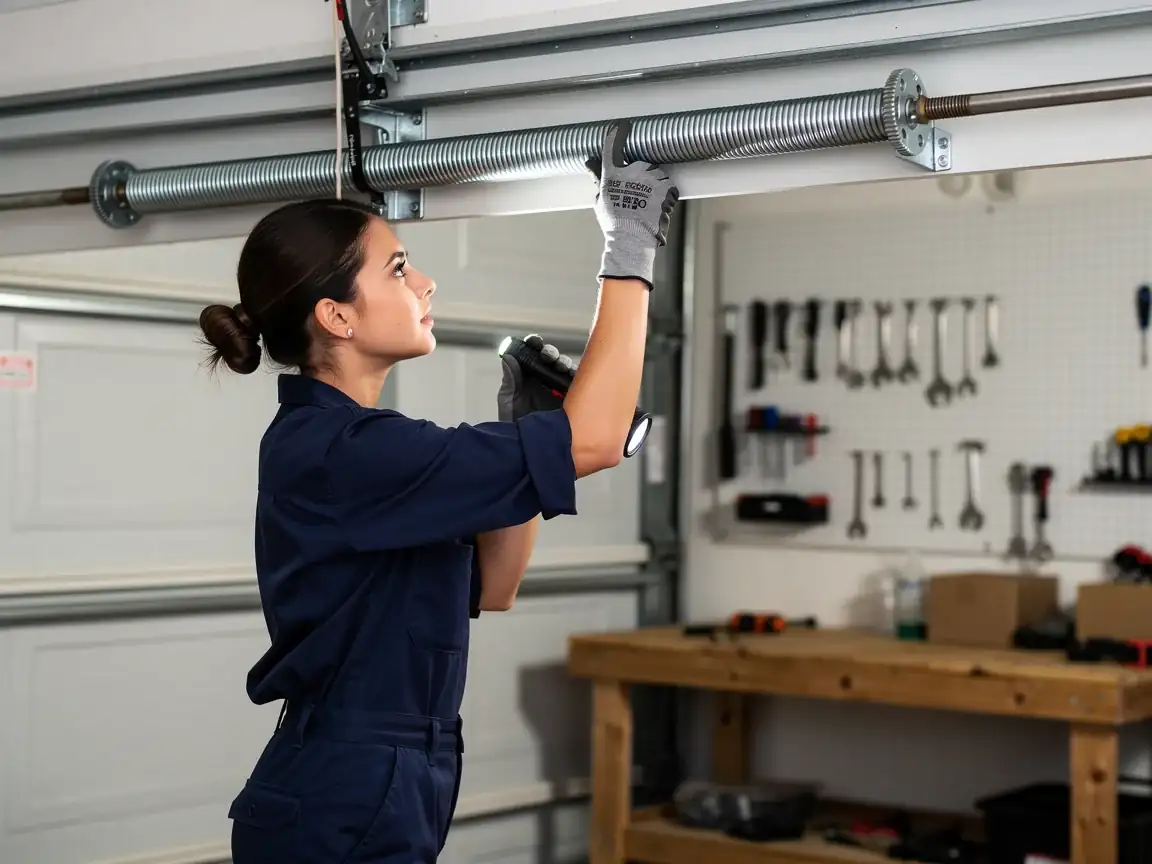
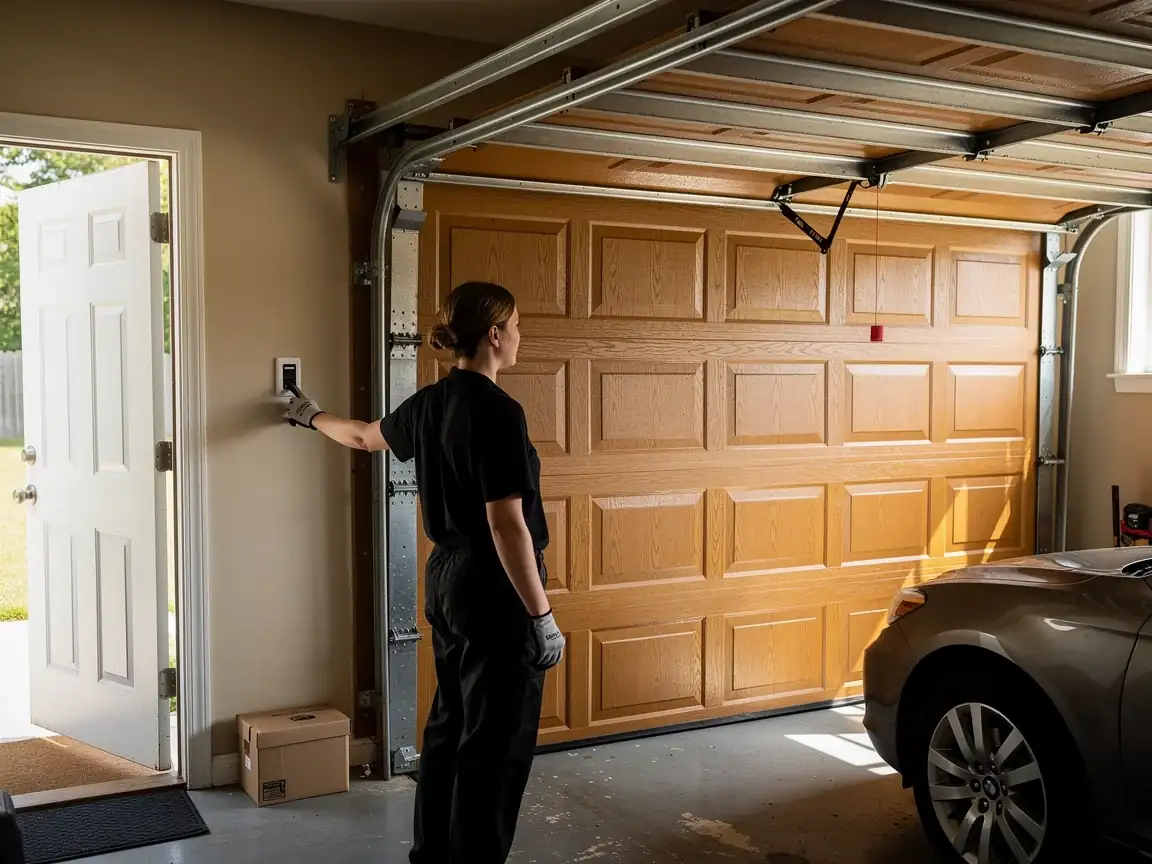
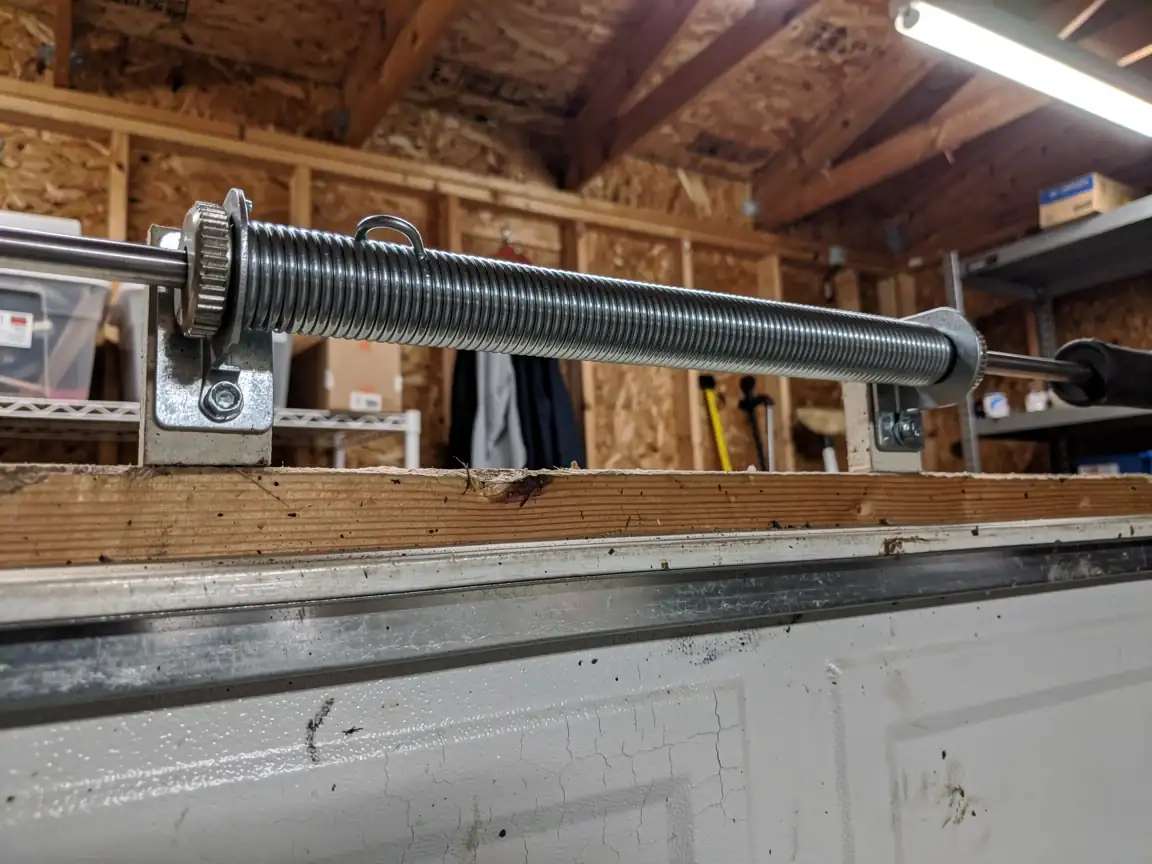
A torsion spring holds real tension, enough to break fingers or worse if you unwind it without the right bar and a clamp on the shaft. We won't walk anyone through that over the phone, and you shouldn't take a video's word for it either. What you can safely check yourself: whether the opener has power, whether the manual release cord has been pulled by accident, whether anything is visibly jammed in the track. If the door won't move and you can hear the opener motor straining, stop - that's a spring or cable problem, not a settings problem, and running the opener against it just burns out the motor on top of the spring you already needed replaced. If a cable has come off the drum and the door is hanging crooked, leave it alone and call. That's a two-person job with the right tools, not a Saturday project.
Time on the Job
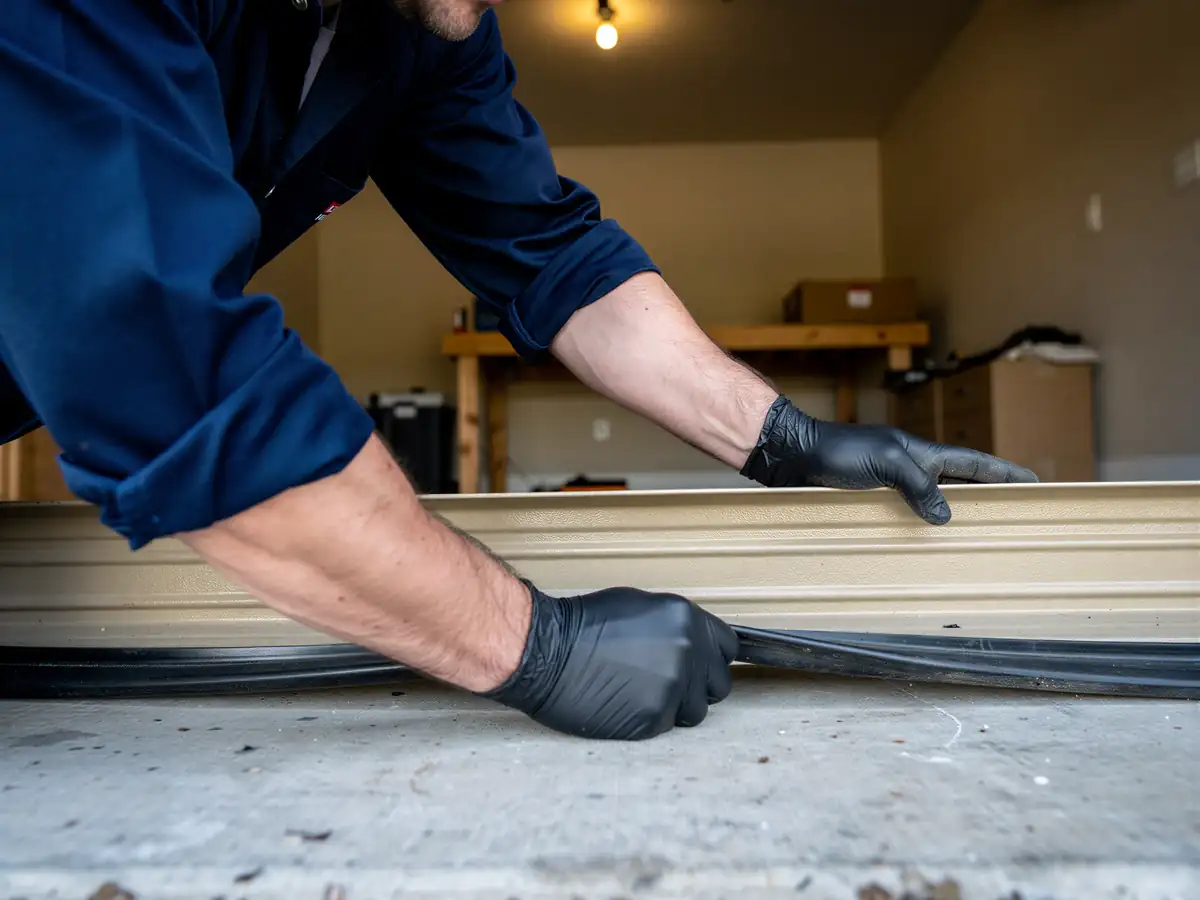
A straightforward torsion spring replacement on a standard double door runs under two hours once we're on site. Cable work alongside it adds a bit more. Track realignment after a door jumps the rail can go quick or slow depending on whether the rollers or the track itself took the damage - sometimes it's a bent section that needs swapping, not just bending back. We won't pretend every job is quick: if the bottom panel has rotted or rusted through on one of these older steel doors, replacing the spring doesn't fix the real problem, and we'll tell you that instead of patching something that's going to fail again in a year. Redlands households sit well above the area's median income, and most of what we see here is well-kept original equipment rather than deferred maintenance - which usually means a clean, single-cause repair rather than a door with five things wrong with it at once.