Serving Grand Junction, CO & nearby
(970) 225-5718
Grand Junction, CO

Garage Door Panel Replacement for Fruitvale Homes

Panel damage on a 1980s Fruitvale garage door often means one section, not the whole thing. We explain when replacement pays and when it doesn't.

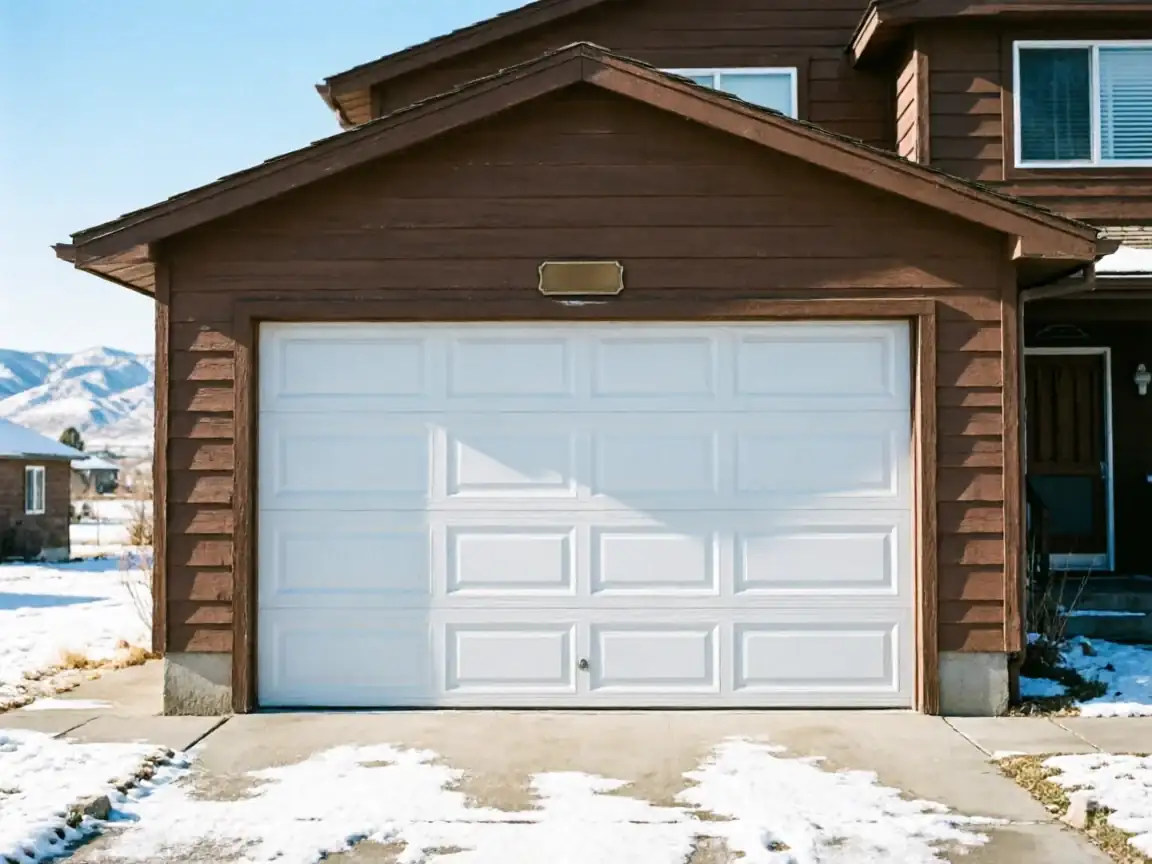
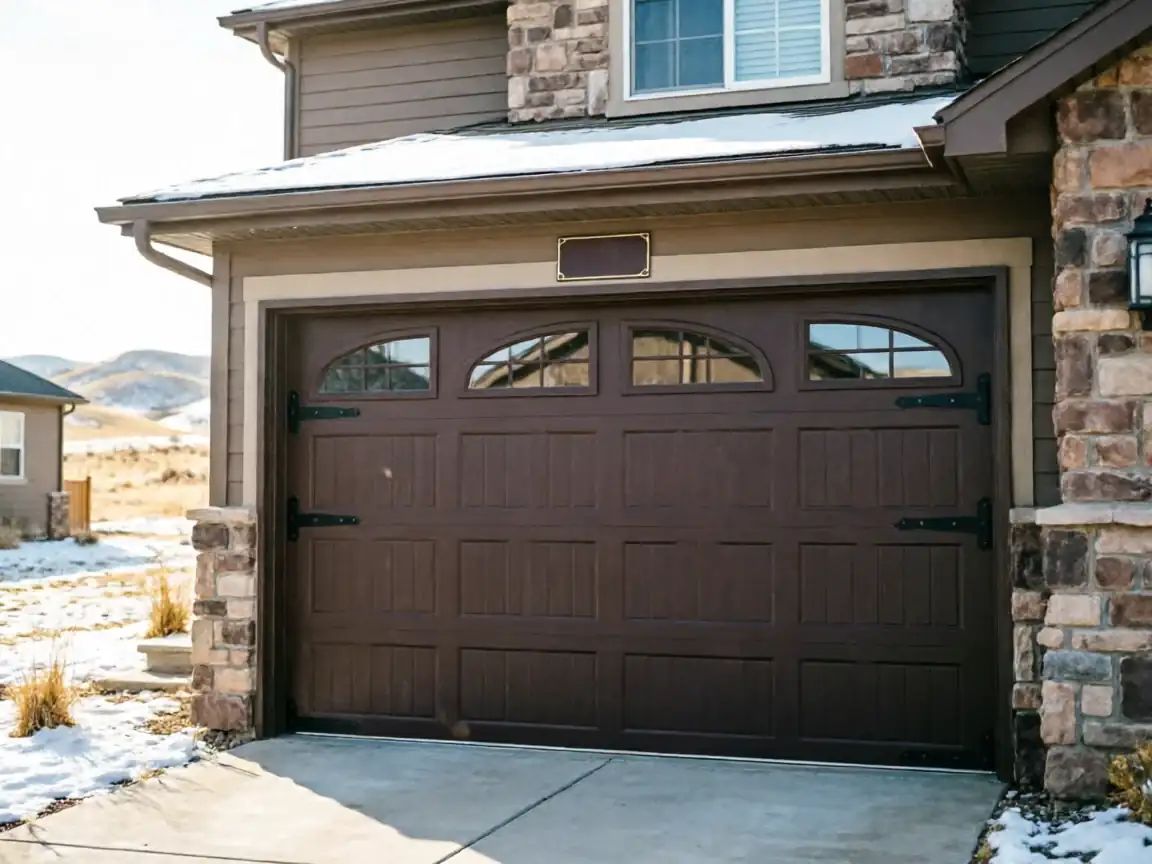
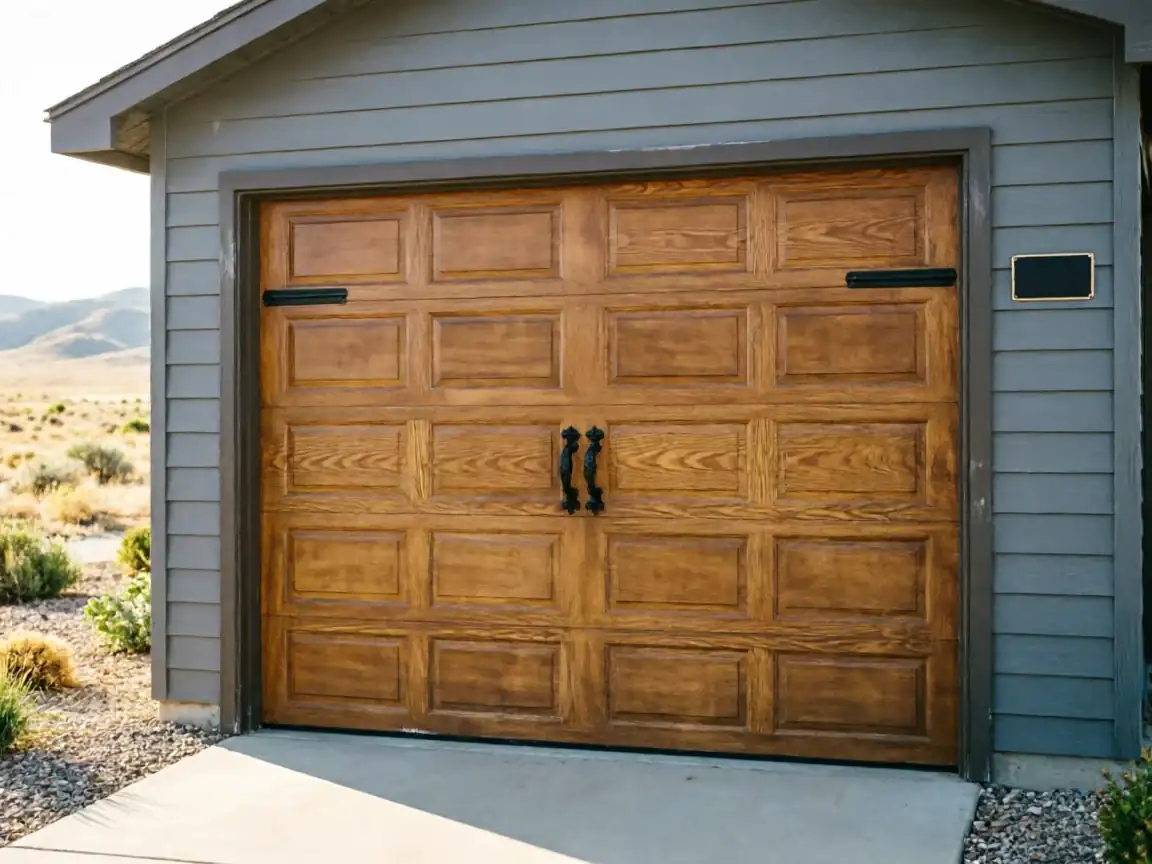
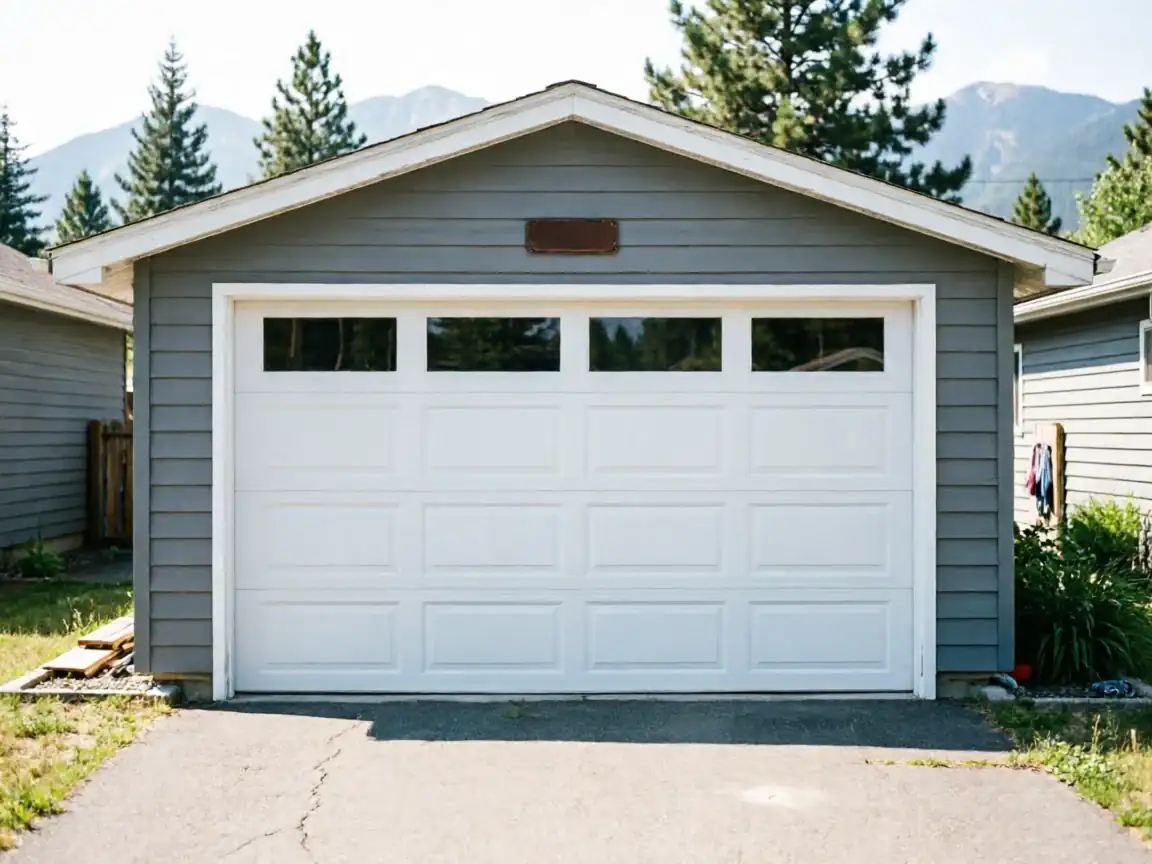
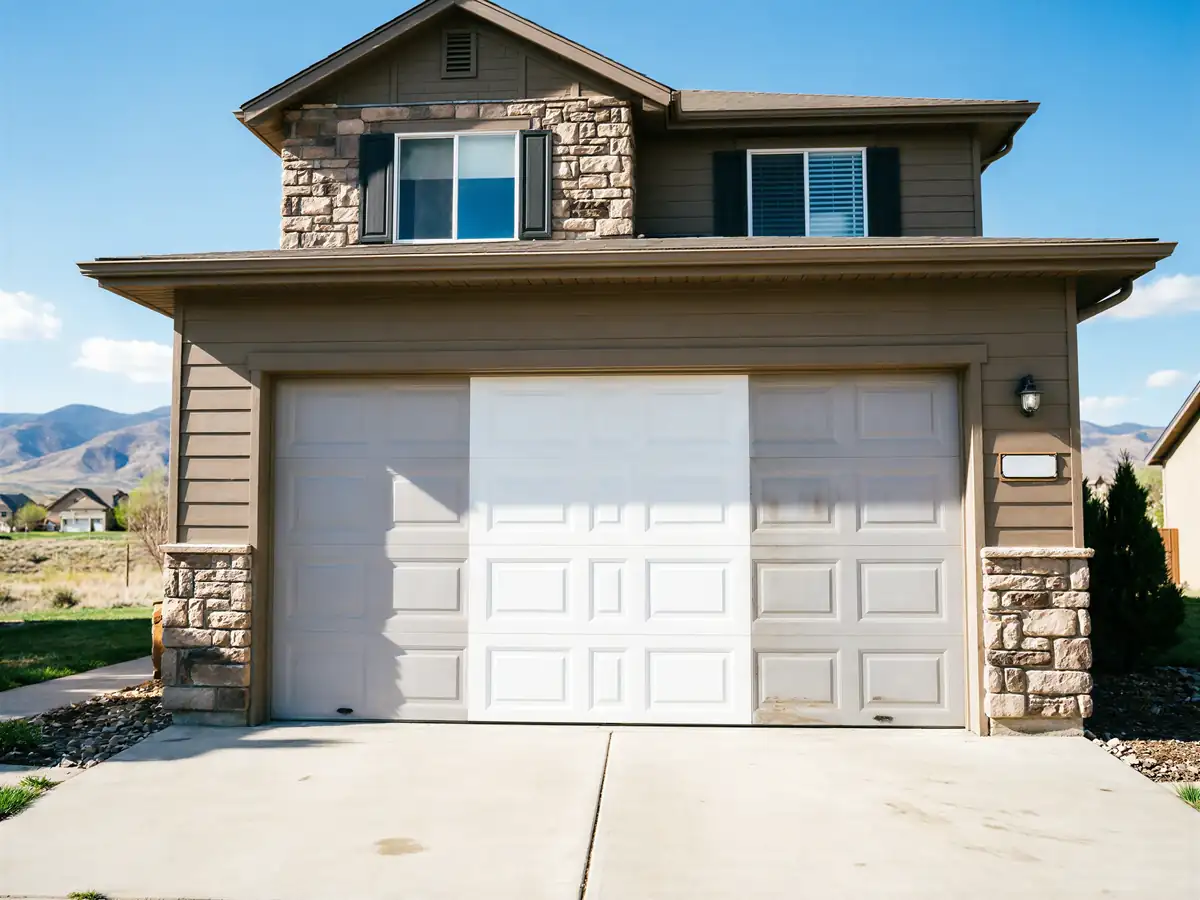
The garage door is half clean and half dirty, with a house and mountains behind it.
Grand Junction, CO
8 services
4 service areas
Diagnosis first, then the fix

What the Repair Takes

Median household income in Fruitvale sits at $76,339, which puts most homeowners here right at the line where a single-panel swap makes sense and a full-door replacement doesn't. A cracked or dented steel panel on a door built in the 1980s or 90s is usually a matched-section job: we pull the model and color code off the backside of an undamaged panel, order that section, and swap it without touching springs, track, or opener if those are still sound. That's typically a half-day job once the part is in hand. Where it stops being worth it is when the door is a true original from the early side of that build window - matching sections for some of those runs got discontinued years ago, and at that point a full replacement actually costs less than hunting down an orphaned panel. We'll tell you straight which side of that line your door falls on before we order anything, because a mismatched panel bolted onto an otherwise fine door looks worse than the dent did and doesn't fix a structural problem if there is one underneath.

Why It Happens Here

Most houses on this stretch of the valley were built between 1977 and 1998, with the median landing around 1984, and that generation of garage door leaned on steel panels over a lighter gauge than what's sold today. Those panels dent instead of flexing, and once a corner takes a hit - a trailer hitch backing in wrong, a stray basketball, a ladder dropped against it - the steel stays bent. The cold winters that hit this part of Colorado make it worse: steel contracts in deep cold, and a panel that's already been dented tends to develop a stress crack along the fold line a season or two later, right where the bend is thinnest. That's the pattern we see most on panel-replacement calls out here - not catastrophic failure, just an old dent that finally gave up. It's a different failure mode than a torsion spring letting go, and the fix is narrower: one section, not the hardware.

How It Shows Up

The first sign is usually cosmetic - a dent you can see from the driveway - but the ones worth a call are the ones where the door doesn't close flush anymore, or where you hear a scrape as it travels that wasn't there before. A bent panel can pull the track slightly out of alignment, and if that goes unaddressed the rollers wear unevenly on one side. Some homeowners also notice daylight at the bottom corner of a dented section in winter, which on a door this age usually means the panel itself has bowed enough to break the seal, not that the weatherstrip has failed. If your door still opens and closes smooth and the dent is purely cosmetic, that's a lower-priority fix - it won't get worse on its own unless something hits it again. If it's dragging, binding, or letting in a draft, that's the one to call about before the cold months really set in.

Parts We Carry

We stock common panel sections and hardware for the door styles that showed up most across the 1980s and 90s construction common to this area - the steel sectional doors with raised-panel or flush designs that builders used through that run. What we don't keep on hand are matched panels for doors from the earlier end of that build window, or for less common import brands; those get special-ordered once we've confirmed the model, and that can add a few days to the timeline. We won't quote you a panel swap sight unseen - color match and panel profile both matter, and guessing wrong means a return trip. If your door is old enough that the manufacturer's stopped making that profile altogether, we'll say so up front rather than stringing out an order that's going nowhere.

Time on the Job

A straightforward single-panel swap, once the part's on the truck, runs about a half-day including alignment and a check of the track and rollers on either side of the damaged section. Add time if the dent pulled the track out of square - that's a separate adjustment, not part of the panel cost, but it's common enough on doors from this era that we check for it every time. If the part has to be special-ordered, the swap itself is still quick; the wait is on the panel arriving, not on the labor. We travel out from Grand Junction for every job here, about five miles, so there's no separate dispatch fee built in for distance - the quote reflects the repair, not the drive.
How it works

From “it’s stuck” to “it’s fixed”

A quick, honest process - no guesswork and no surprises, start to finish.

  1. 1
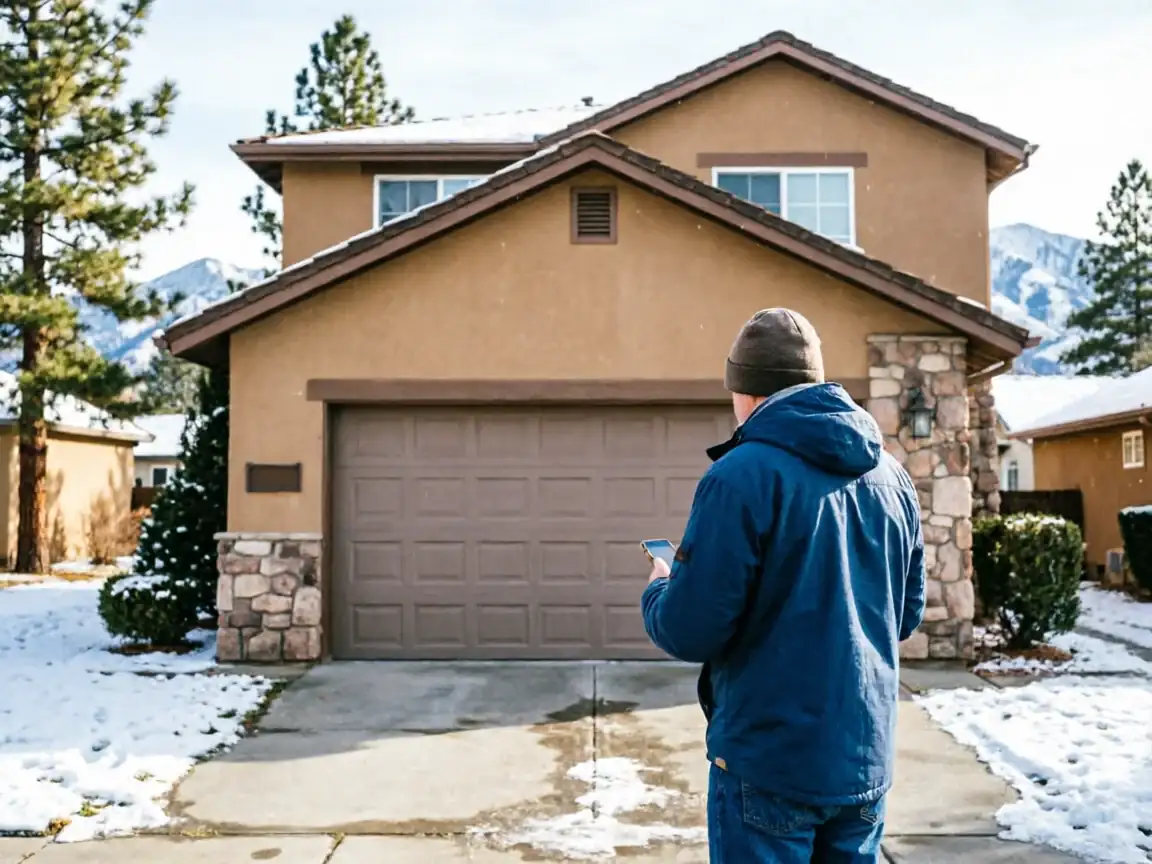
    A person in a blue jacket stands in a snowy driveway looking at a phone.

    Tell us what’s wrong

    Describe the symptom - won’t open, loud bang, opener runs but the door won’t move.

  2. 2
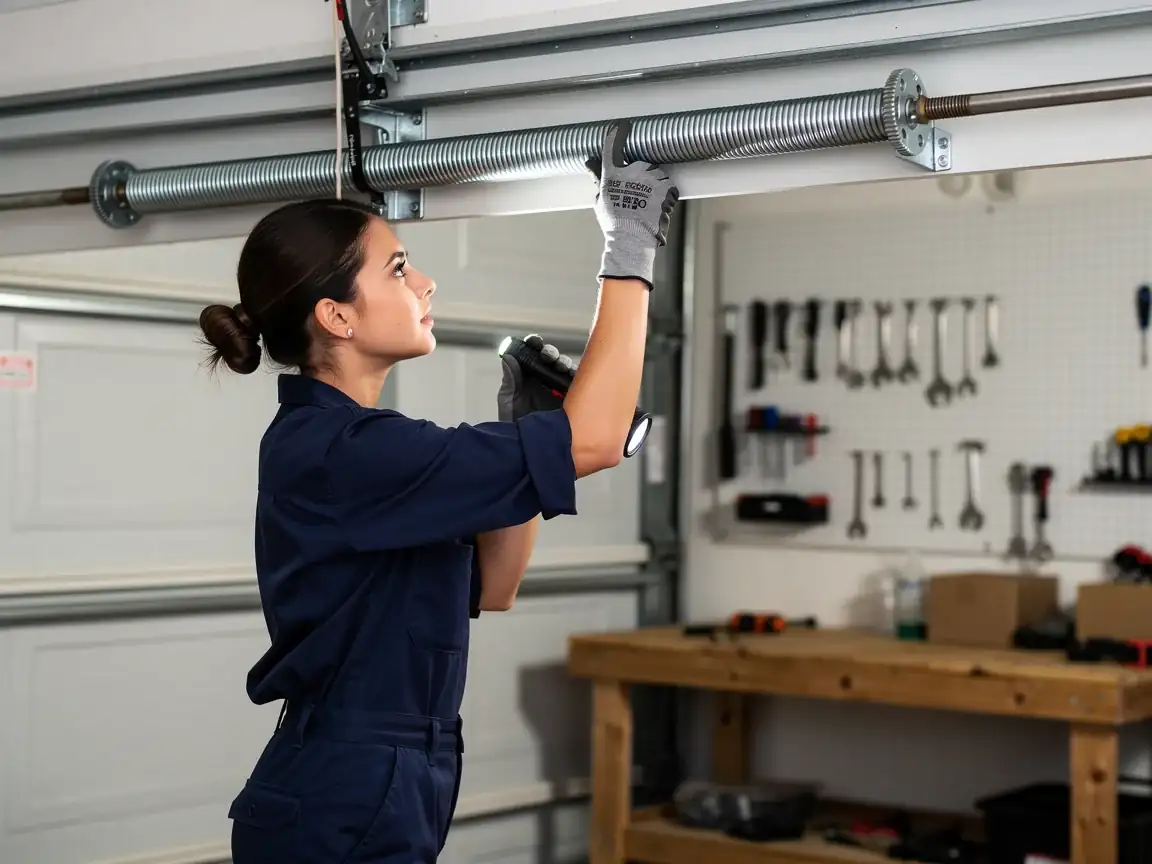
    A technician in a blue jumpsuit inspects a garage door torsion spring with a flashlight.

    On-site diagnosis

    A technician tests the door under power and by hand and finds what actually failed.

  3. 3
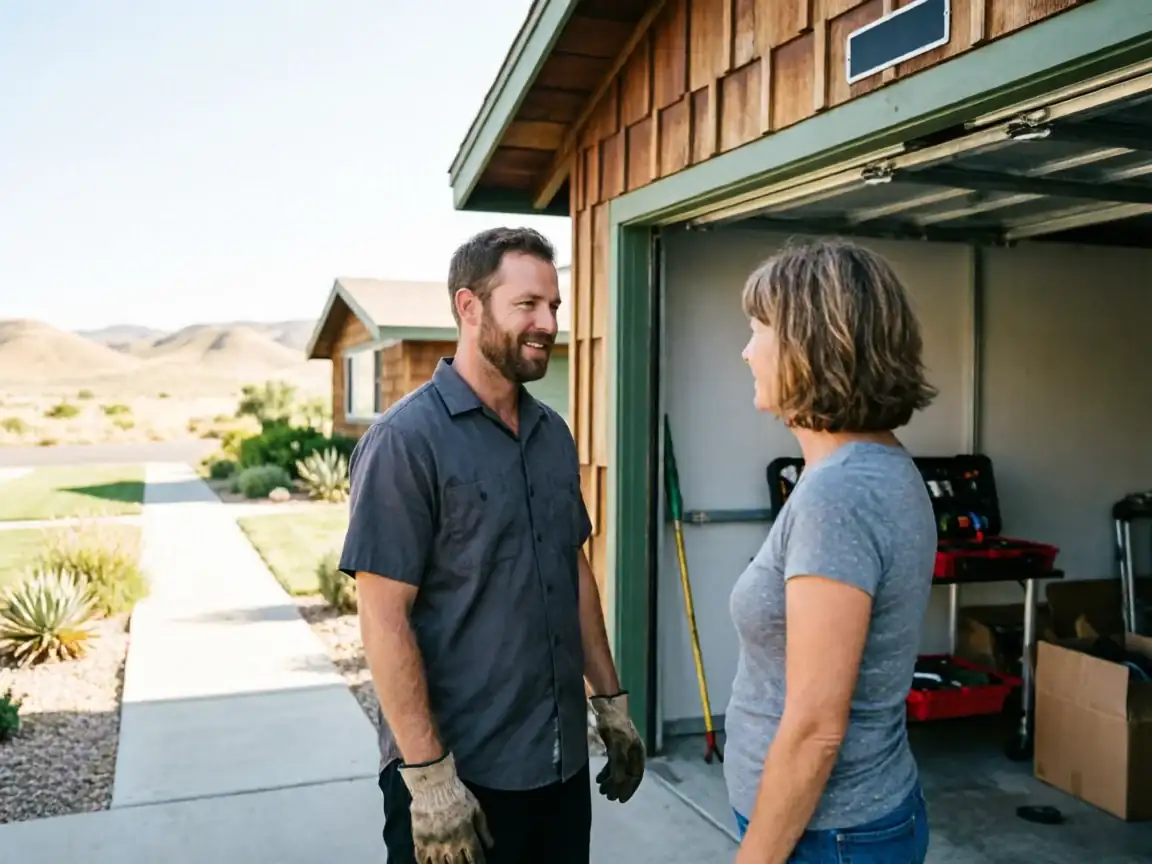
    A technician wearing gloves talks to a woman in front of an open garage.

    Clear, up-front plan

    You get the fix that’s needed and what drives the cost - before any work starts.

  4. 4
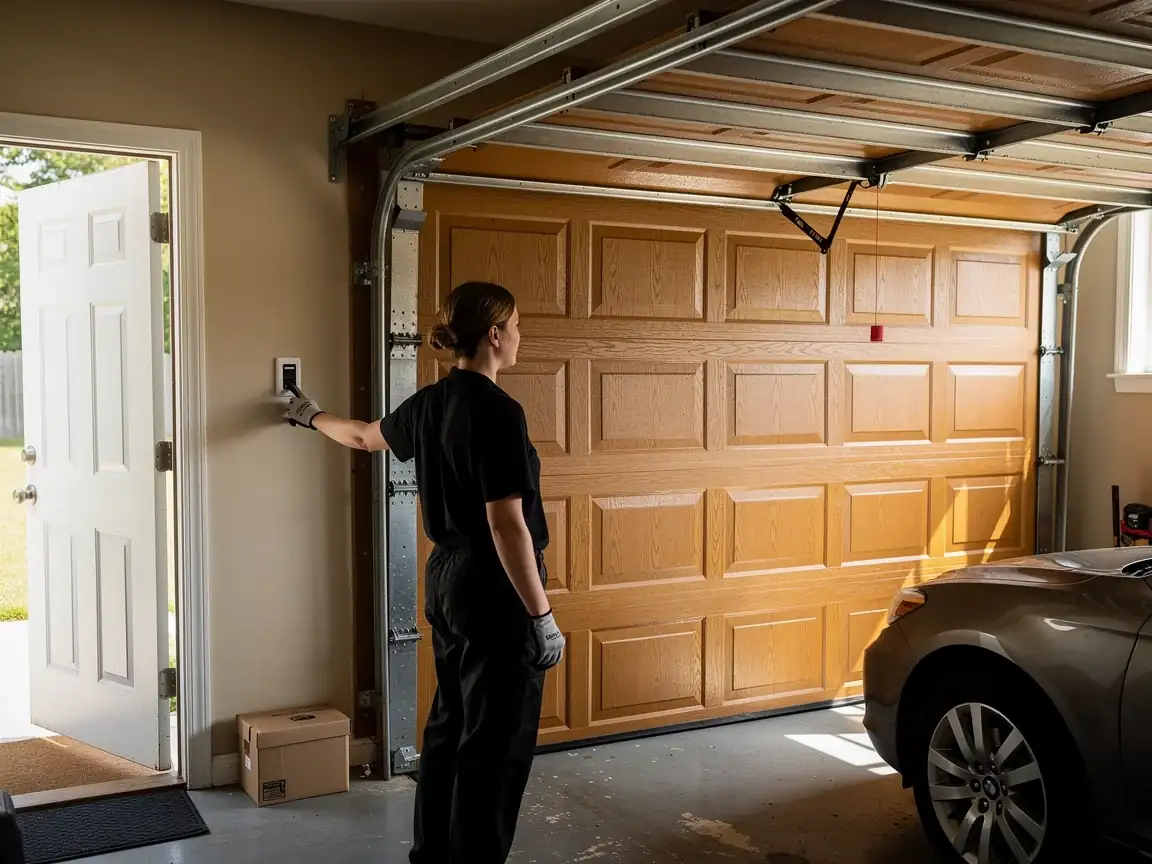
    A technician presses a button on the wall next to a closed wooden garage door.

    Repaired & tested

    The repair is done, the door is set true and tested, and the work area left clean.

Next step

Not sure which repair your door needs in Grand Junction, CO? Describe what it’s doing - every job starts with a diagnosis.

How we work

What to expect

  • Diagnosis firstEvery visit starts by finding what actually failed - not a pre-written parts list.
  • The right part for the doorSprings and openers matched to the door’s weight and age, so the fix holds up.
  • Straight answersWhen a repair makes more sense than a replacement - or the reverse - you hear it plainly.
  • Clean, careful workTension released safely, hardware set true, the door tested under power before we leave.
60,358Residents in Grand Junction
8Garage door services
4Neighborhoods & suburbs
COServing Grand Junction, CO
Questions

Frequently asked

Straight answers about garage door repair in Grand Junction. Still unsure? Ask us directly.

Is it cheaper to replace one panel or the whole door?

For most houses in Fruitvale, built in the 1980s or 90s, a single matched panel is available and cheaper than a full door. It stops being cheaper if your door is old enough that the manufacturer discontinued that panel profile - at that point sourcing one orphaned section can cost more than replacing the whole door.

Will a new panel match the color of my old door?

We pull the color and model code off an existing panel and order against that, but paint fades over 30-plus years, so a brand-new section may look slightly brighter than the rest of the door until it weathers. We'll flag that before ordering, not after it's installed.

Does cold weather cause panel damage directly?

Not usually on its own. What we see is a panel that was already dented taking a stress crack during a hard cold stretch, because steel gets less forgiving in low temperatures. The dent is almost always the original cause; the cold just finishes the job.

How long until the part arrives if it has to be ordered?

It depends on the panel profile and whether it's still in production. Common sections from the 1980s-90s builds typical of this area are usually quick. Older or less common profiles take longer, and we'll give you a real estimate once we've identified the exact panel, not a generic one.

Ready to get your garage door sorted?

Tell us what it’s doing and where you are in Grand Junction - we’ll take it from there.

Request a QuoteCall